

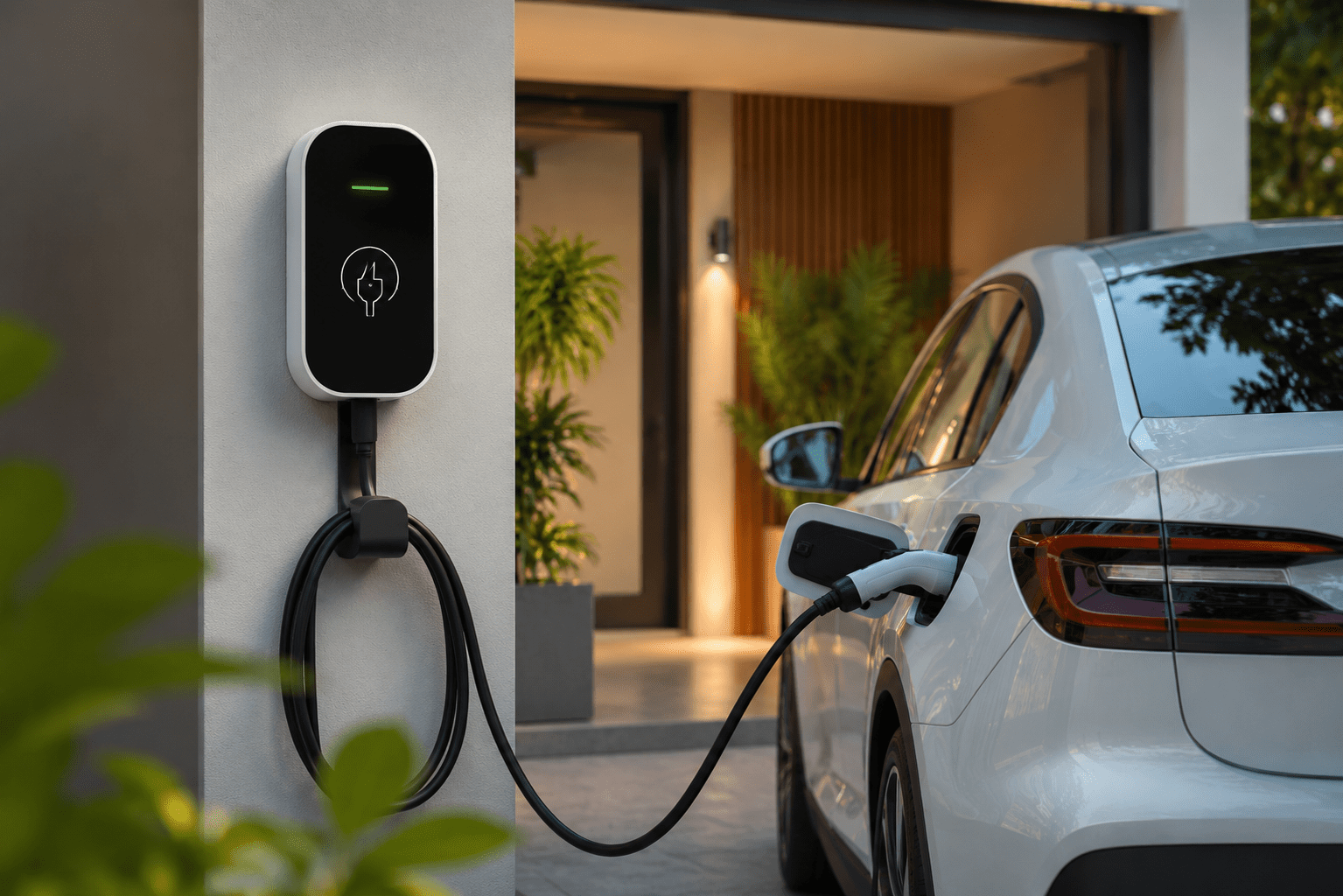
Buying an electric vehicle often changes the way a household thinks about energy. Suddenly, the garage becomes part of the home’s electrical system, charging times matter, and existing solar may take on a new role. Before arranging a Home EV Charger Installation, homeowners should consider how often the car will charge, when it is usually parked at home and whether a battery is genuinely needed at the same stage.
There is no universal order for adding an EV charger, solar and battery storage. The most practical sequence depends on driving habits, household electricity use and the equipment already installed.
Begin With the Vehicle’s Real Charging Needs
Homeowners do not necessarily need the fastest charger available. Someone who drives a relatively short distance each day may have many hours overnight to restore the energy used. A driver covering much longer distances or using the vehicle several times a day may need a different charging strategy.
Vehicle capability matters as well because the maximum charging rate supported by the car can affect which charger features are useful.
Matching the charger to everyday use can prevent unnecessary spending on capacity that the household rarely needs.
Check When the Vehicle Is Actually at Home
Charging time can influence how effectively an EV works alongside rooftop solar. A car that remains at home during part of the day may be able to use solar generation directly. People working from home, shift workers or households with multiple vehicles may have more opportunities for daytime charging.
If the vehicle is normally away until the evening, charging demand may instead occur after rooftop generation has declined. Understanding this routine helps homeowners decide whether simple scheduled charging is sufficient or whether broader energy-management options should be considered.
Look at the Existing Electrical System
An EV charger introduces a new electrical load, so equipment selection should follow an assessment of the property rather than come before it.
Switchboard condition, supply capacity and other high-demand appliances can all influence the most appropriate charging arrangement.
Homes already using electric cooking, air conditioning, pool equipment or electric hot water may have a different load profile from properties with fewer major electrical appliances. A qualified electrician can assess how charging fits into the existing installation and whether further electrical work is required.
Decide Whether Storage Solves a Real Problem
Interest in solar battery storage in NSW may increase once an EV arrives because homeowners begin thinking more closely about when electricity is generated and consumed.
However, a battery should solve a clear household need rather than simply be added because an EV is present.
If the vehicle can regularly charge during solar-producing hours, direct solar charging may already support part of its energy requirements. If the car is mainly charged after sunset, storage may be worth examining alongside other options.
Actual consumption data provides a better basis for this decision than assumptions.
Use Charging Controls More Strategically
Many modern charging systems can offer scheduling or energy-management functions, depending on the equipment selected.
This can allow homeowners to choose when charging starts instead of having the vehicle immediately draw power whenever it is plugged in.
Useful strategies may include:
-
charging during daylight when the vehicle is home;
-
avoiding periods of high household demand;
-
scheduling charging for suitable tariff periods;
-
limiting charging power when other appliances are operating; and
-
coordinating charging with compatible solar-management equipment.
Available features differ between chargers, so homeowners should confirm capabilities before purchasing equipment.
Think About the Next Five Years
Today’s EV may not be the household’s only major electrical change. A second electric vehicle could arrive later. Gas hot water may be replaced by a heat pump, or an induction cooktop could be installed during a kitchen renovation. Additional air conditioning may also increase demand.
These changes are worth mentioning when the charger is planned. Future-proofing does not mean buying oversized equipment now. It means avoiding decisions that unnecessarily restrict sensible upgrades later.
Consider Installing in Stages
For many households, a staged approach can work well. The EV charger might be installed first, allowing the homeowner to understand real charging patterns. If rooftop solar already exists, monitoring can show how much vehicle charging overlaps with solar generation and how much additional electricity is imported.
Battery storage can then be considered using actual household data rather than predictions. Other households may already have enough information about evening consumption and future electrification to plan several upgrades together. Neither approach is automatically better. The sequence should reflect the property and household.
Conclusion
Choosing whether to install an EV charger or battery first should begin with driving habits and household energy use rather than a fixed technology sequence. Charging frequency, vehicle availability during daylight, electrical capacity and existing solar generation can all influence the best approach. Some homeowners may find that smart scheduling and direct solar charging meet their needs without immediate storage, while others may eventually benefit from adding a battery. Planning upgrades in stages can provide valuable real-world data while preserving flexibility. The strongest home-energy strategy is one that adds technology for a clear purpose and adapts as transport and household electricity needs continue to change.