

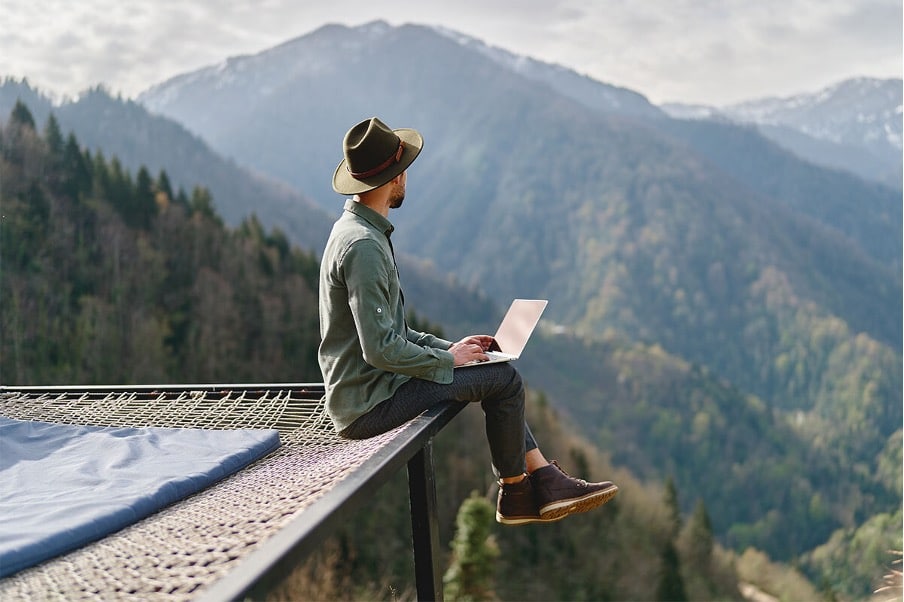
Digital nomad culture is reshaping how people think about work, freedom, and lifestyle in the modern world. Instead of spending decades working from the same office, many professionals now carry their careers with them while exploring different cities and countries.
Imagine waking up in a small apartment near a beach in Bali, finishing a few hours of remote work, and then spending the afternoon exploring local markets or learning to surf. For thousands of people worldwide, this is not a vacation fantasy but everyday life.
This lifestyle has grown rapidly in the last decade as technology made remote work easier and companies became more flexible with where employees can operate. High-speed internet, cloud-based tools, and global coworking spaces have turned the world into a potential office.
The result is a growing global movement where work is no longer tied to one location.
Table of Contents
ToggleThe Rise of Remote Work and Digital Nomad Culture
The expansion of remote work created the perfect environment for Digital nomad culture to flourish. In the past, most careers required employees to remain in one physical office location. This limited the possibility of traveling while maintaining a stable job.
However, technological changes gradually broke those barriers. Communication tools such as video conferencing, project management software, and collaborative cloud platforms allowed teams to work effectively from different locations.
When remote work became more common, many professionals realized something important. If they could work from home, they could also work from almost anywhere in the world.
Some people started with short work-from-travel experiments, taking their laptops on extended trips. Over time, these temporary experiences evolved into a full lifestyle where travel and work exist simultaneously.
Cities known for affordability, reliable internet, and vibrant communities began attracting digital nomads from around the globe.
Understanding the Core Values of Digital Nomad Culture
At its heart, Digital nomad culture is about flexibility, independence, and exploration. People who adopt this lifestyle often value experiences and personal freedom over traditional career structures.
Instead of focusing solely on climbing a corporate ladder, digital nomads often prioritize life balance. They want the ability to choose their environment, schedule, and pace of work.
This cultural shift reflects a broader generational change. Many younger professionals believe success is not only defined by income but also by lifestyle satisfaction and personal growth.
Travel becomes an important part of that growth. Living in different countries exposes people to new perspectives, languages, and traditions. These experiences often influence how digital nomads approach both work and life.
For example, a freelance designer working from Lisbon might collaborate with clients in New York while learning Portuguese and exploring European culture.
The lifestyle encourages curiosity and adaptability.
Digital Nomad Culture and the Global Workforce
The rise of Digital nomad culture is not just about travel; it is also transforming the global workforce.
Companies today are increasingly comfortable hiring talent regardless of geographic location. This shift allows businesses to access a broader talent pool while offering employees greater flexibility.
Freelancers, entrepreneurs, and remote employees often operate in international markets, working with clients and teams across multiple time zones.
A marketing consultant based in Thailand may serve clients in Europe and North America. A software developer traveling through South America might collaborate with startups in Silicon Valley.
This globalized workforce encourages cross-cultural collaboration and innovation.
It also challenges traditional assumptions about where productivity happens. Work is no longer limited to office desks or corporate headquarters.
Instead, productivity becomes tied to outcomes rather than location.
Everyday Life in the Digital Nomad Community
Living within Digital nomad culture often involves balancing professional responsibilities with travel experiences.
A typical day for a digital nomad may start with checking emails or attending virtual meetings. Once work tasks are completed, the rest of the day might include exploring the city, visiting cafés, or connecting with other remote workers.
Coworking spaces play a major role in this lifestyle. These shared work environments provide reliable internet, comfortable workstations, and networking opportunities.
In many cities popular among digital nomads, coworking spaces have become community hubs. People gather not only to work but also to attend workshops, networking events, and social gatherings.
Friendships often form quickly because many nomads share similar lifestyles and interests.
These communities help reduce the isolation that sometimes comes with remote work.
Challenges Within Digital Nomad Culture
Although the lifestyle looks exciting on social media, Digital nomad culture also presents real challenges.
One common difficulty involves maintaining stability. Constantly moving between cities can make it harder to establish routines or long-term relationships.
Time zone differences can also complicate communication with clients or teams. A developer working from Southeast Asia might attend meetings late at night to align with American working hours.
Financial planning can become more complex as well. Digital nomads often manage international payments, currency fluctuations, and varying living costs across countries.
Another challenge involves visas and legal regulations. Not every country offers clear policies for remote workers living temporarily within their borders.
Despite these obstacles, many digital nomads find that the lifestyle benefits outweigh the difficulties.
Technology Powering Digital Nomad Culture
Technology is the backbone of Digital nomad culture, enabling professionals to remain connected regardless of location.
High-speed internet, portable laptops, and cloud software allow people to complete complex tasks from cafés, coworking spaces, or temporary apartments.
Project management platforms help distributed teams coordinate projects effectively. Communication tools make it easy to hold meetings with colleagues located thousands of kilometers away.
Financial technology has also simplified remote work. Digital payment systems allow freelancers and remote workers to receive payments from clients across the world.
Travel apps, accommodation platforms, and global networking communities further support the nomadic lifestyle.
These digital tools create a seamless environment where work and travel integrate naturally.
Popular Destinations for Digital Nomads
Several destinations around the world have become popular hubs for digital nomads. These locations usually offer affordable living costs, strong internet infrastructure, and welcoming communities.
Cities such as Bali, Lisbon, Chiang Mai, and Medellín frequently attract remote professionals. Each location offers its own unique cultural experience while supporting the needs of remote workers.
In these cities, cafés often double as workspaces, and coworking centers provide structured environments for productivity.
The presence of other digital nomads also creates vibrant social networks where people share experiences, travel tips, and professional opportunities.
Living in these environments reinforces the sense that Digital nomad culture is not just an individual lifestyle but also a global community.
The Economic Impact of Digital Nomad Culture
The growth of Digital nomad culture has begun influencing local economies in various parts of the world.
Cities that attract remote workers often experience increased demand for housing, coworking spaces, cafés, and hospitality services.
Some governments have even introduced digital nomad visas to attract skilled professionals who contribute to the local economy without competing for traditional jobs.
These programs allow remote workers to live legally in a country for extended periods while continuing to work for foreign companies.
As a result, tourism and long-term remote living are gradually merging into a new economic model.
Communities that adapt to this trend often benefit from international talent, cultural exchange, and increased economic activity.
Personal Growth and Lifestyle Freedom
One reason many people are drawn to Digital nomad culture is the promise of personal growth.
Living in different environments encourages adaptability and creativity. People learn to navigate unfamiliar cultures, languages, and social norms.
These experiences often shape individuals in profound ways.
A writer who spends several months in Morocco might gain new inspiration from local art and architecture. A programmer living in Japan may develop a deeper appreciation for different work ethics and traditions.
This exposure to diverse perspectives broadens understanding and fosters personal development.
The freedom to design one’s lifestyle becomes a powerful motivator.
For many digital nomads, success is not measured solely by financial achievement but also by the richness of experiences gathered along the journey.
EEAT Perspective: Experience, Expertise, Authority, and Trust
Discussing lifestyle movements like digital nomadism requires credible insights and real-world perspectives. Content aligned with EEAT principles focuses on experience, accurate information, and trustworthy analysis.
Experts in remote work trends often study the economic and cultural shifts associated with global mobility. Their research helps explain why digital nomad communities are growing rapidly.
Experienced remote workers also contribute valuable insights about productivity, travel logistics, and maintaining work-life balance while moving between locations.
Authoritative discussions about Digital nomad culture emphasize transparency and realistic expectations rather than romanticizing the lifestyle.
Trustworthy information acknowledges both opportunities and challenges. By presenting balanced perspectives grounded in real experiences, readers gain a deeper understanding of how this modern lifestyle truly functions in the evolving global economy.
Read also:
rampant meaning
delimitation meaning in kannada
4509630846
18776778067
5879339052
corer meaning