

Explore how progressive web applications bridge the divide between traditional mobile software and modern wearable technology.
Key Takeaways
-
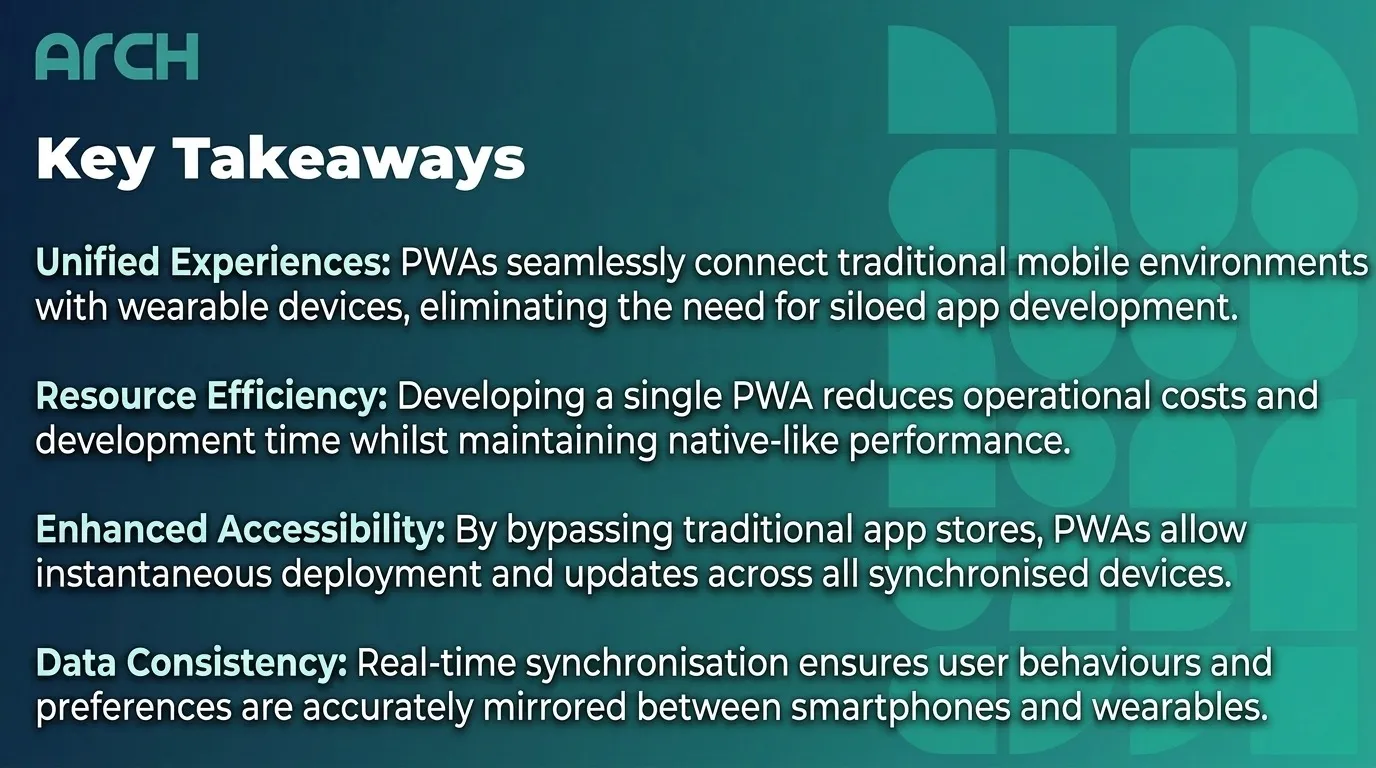
Unified Experiences: PWAs seamlessly connect traditional mobile environments with wearable devices, eliminating the need for siloed app development.
-
Resource Efficiency: Developing a single PWA reduces operational costs and development time whilst maintaining native-like performance.
-
Enhanced Accessibility: By bypassing traditional app stores, PWAs allow instantaneous deployment and updates across all synchronised devices.
-
Data Consistency: Real-time synchronisation ensures user behaviours and preferences are accurately mirrored between smartphones and wearables.
The Evolution of Cross-Device Software
The technological landscape is experiencing a fundamental shift in how users interact with digital ecosystems. Consumers and enterprise users alike no longer rely exclusively on smartphones to manage their digital lives. Instead, the emerging ecosystem of wearable technology demands a more unified approach to software development. Traditional mobile applications, while robust, often struggle to provide a seamless transition across these diverse hardware platforms.
Progressive Web Applications (PWAs) have emerged as the strategic solution to this fragmentation. By combining the accessibility of a browser with the native functionality of a dedicated app, PWAs offer an elegant bridge between platforms. This architectural shift significantly moves the needle for businesses aiming to deliver consistent digital experiences. Consequently, tech leaders are increasingly leveraging PWAs to unify mobile and wearable environments.
Overcoming the Constraints of Traditional Apps
Historically, developing software for both mobile phones and wearable devices required distinctly different programming languages and frameworks. This fragmented approach forces development teams to maintain multiple codebases, significantly inflating costs and delaying time to market. Furthermore, wearable devices inherently possess constrained processing power and limited storage capacity. Traditional, heavy mobile applications simply cannot be ported directly to a smartwatch or fitness tracker without severe performance degradation.
PWAs inherently solve these hardware and software constraints through their lightweight, browser-based architecture. They dynamically adapt to the screen size and processing capabilities of the specific device they are running on. This flexibility ensures that a smartwatch user receives a tailored, responsive interface without burdening the device’s internal memory. Ultimately, this efficient use of resources directly improves the end-user experience and encourages wider enterprise adoption.
Integrating Creativity and Code Across Platforms
Successfully bridging the gap between smartphones and wearables requires more than just functional programming; it demands a strategic vision. Developers must balance aesthetic design with rigorous technical execution to ensure the interface feels native on any screen. This precise intersection of creativity and code is where industry-leading applications truly differentiate themselves in a crowded marketplace. It ensures that the transition from checking a mobile dashboard to receiving a wearable notification is entirely frictionless.
Achieving this level of technical synergy often requires partnering with experts who understand the nuances of cross-platform architecture. High-end website app and website developers design PWAs that fundamentally align with broader enterprise goals and user behaviours. By focusing on measurable results, these specialists ensure the software not only functions perfectly but also drives tangible business value. The result is a unified digital product that commands user loyalty and operational efficiency.
Enterprise Solutions and Measurable Results
For enterprise environments, the integration of mobile and wearable technology via PWAs unlocks unprecedented operational advantages. Logistics, healthcare, and field service sectors are already deploying smartwatches and connected glasses to streamline their daily workflows. PWAs allow these organisations to deploy bespoke tools instantly across their entire hardware fleet without navigating cumbersome app store approvals. This rapid deployment model is crucial for maintaining agility in fast-paced operational settings.
The impact of this unified approach is easily quantifiable, offering leaders clear, measurable results. Companies report significant reductions in IT overheads alongside marked improvements in employee productivity and data accuracy. Because a PWA updates automatically upon connection, all personnel operate on the latest software version simultaneously. This consistency reduces security vulnerabilities and ensures reliable performance across the entire digital ecosystem.
Conclusion
The divide between traditional mobile software and the wearable technology ecosystem is rapidly closing. Progressive Web Applications are at the very centre of this integration, offering a lightweight, adaptable, and highly efficient solution. By moving away from fragmented, platform-specific development, organisations can streamline their digital strategy and reduce long-term maintenance costs.
As wearable technology continues to evolve, the reliance on flexible architectures like PWAs will only intensify. Businesses that adopt this unified approach today will position themselves as market leaders, delivering superior experiences across every device. Ultimately, investing in progressive web technologies is a strategic imperative for any forward-thinking enterprise.
Frequently Asked Questions
What makes a PWA different from a traditional mobile application? A Progressive Web Application operates through a web browser but delivers a native-like experience, including offline capabilities and push notifications. Unlike traditional applications, PWAs do not require downloading from an app store and share a single codebase across all devices.
How do PWAs improve the performance of wearable technology? Wearable devices often have limited storage and processing power compared to smartphones. PWAs are inherently lightweight and process data efficiently, allowing them to deliver fast, responsive interfaces without draining the wearable’s battery or memory.
Can PWAs securely handle enterprise data across multiple devices? Yes, PWAs are served exclusively over HTTPS, ensuring that all data transmitted between the server, the mobile phone, and the wearable device is securely encrypted. This makes them highly suitable for enterprise environments managing sensitive information.
