

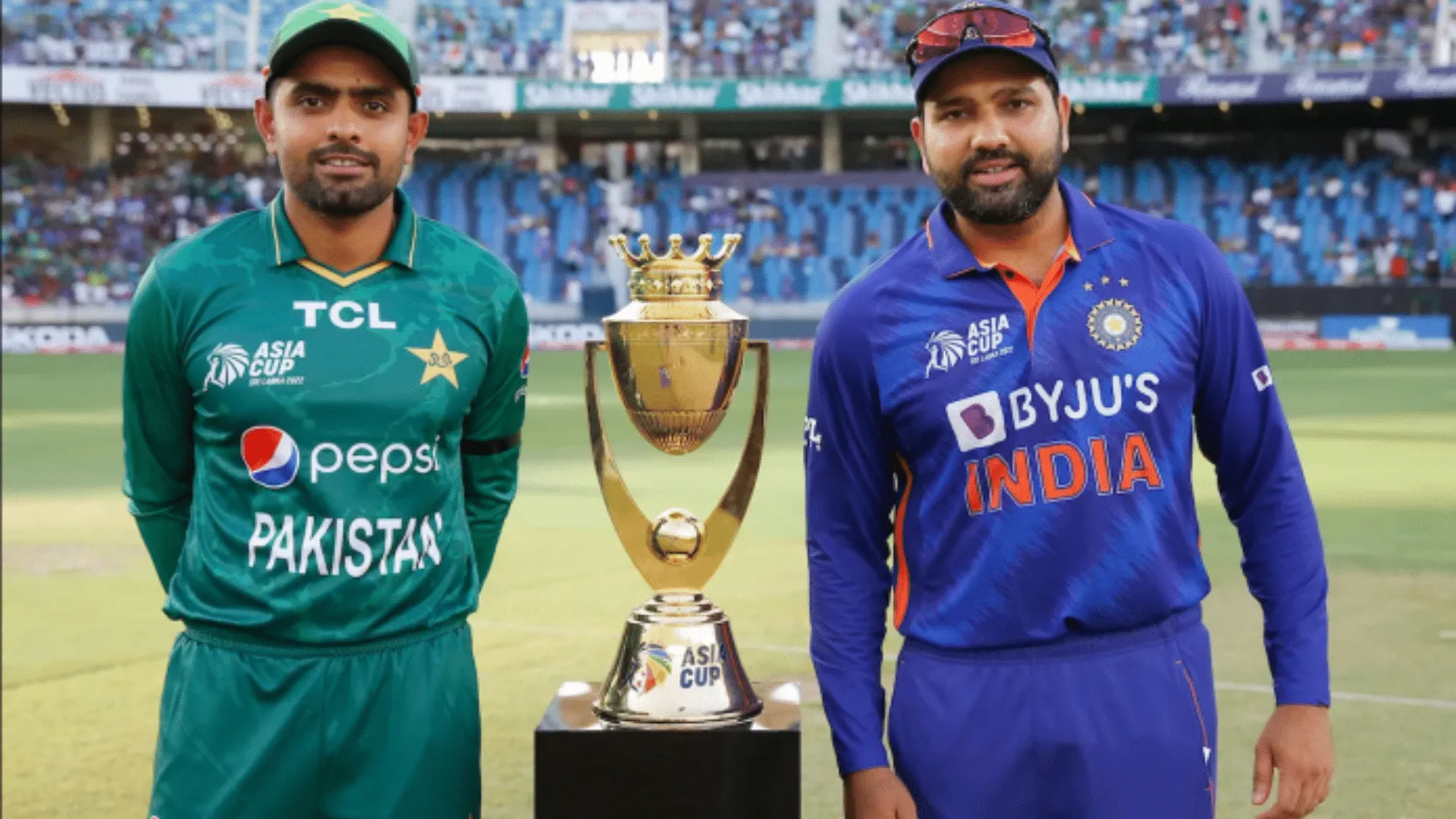
Global Sports Rivalries are the beating heart of competitive athletics, transforming simple games into epic narratives that span generations and bridge vast cultural divides. There is something primal about standing in a stadium when two historical adversaries take the field, a collective tension that you can almost feel vibrating in the air. It is not just about a scoreline or a trophy; it is about identity, pride, and the stories we tell ourselves about who we are. Whether it is a local derby in London or a cross-continental clash in cricket, these rivalries provide the stakes that make sports the most popular form of entertainment on the planet.
The beauty of these deep-seated animosities is that they often transcend the sport itself. They become a reflection of history, politics, and social movements. Think about a time you sat down to watch a game, even if you weren’t a die-hard fan of either team, yet you found yourself leaning forward as the clock ticked down. That magnetic pull is the result of decades, sometimes centuries, of competition distilled into a few hours of high-stakes drama. These rivalries are the reason stadiums are built and why jerseys are passed down as family heirlooms.
Understanding Global Sports Rivalries requires looking beyond the tactical formations or the physical prowess of the athletes. It requires an appreciation for the “lore” of the matchup. Every great rivalry has its defining moments—a controversial goal, a last-minute home run, or a display of sportsmanship that mends a rift for just a fleeting second. From the football pitches of Spain to the cricket grounds of the Indian subcontinent, let’s explore the legendary battles that have come to define the very essence of human competition.
The Duel of the Titans: El Clásico
When people discuss footballing prestige, the conversation inevitably leads to the titanic struggle between Real Madrid and FC Barcelona, famously known as El Clásico. This is perhaps the most scrutinized of all Global Sports Rivalries, drawing hundreds of millions of viewers from every corner of the earth. The roots of this tension are deeply embedded in Spanish history, representing a clash between the centralized power of Madrid and the fiercely independent spirit of Catalonia. For many fans, the game is a political statement as much as it is a sporting event.
I remember watching an El Clásico during the height of the Messi and Ronaldo era. The atmosphere was beyond electric; it was almost combustible. Every time Lionel Messi touched the ball, the Madrid supporters held a collective, terrified breath. Every time Cristiano Ronaldo surged forward, the Barcelona faithful hissed with a mixture of fear and respect. These two players didn’t just play for their clubs; they became the avatars for two competing philosophies of the game. Madrid represented a galaxy of superstars and relentless winning, while Barcelona stood for a poetic, home-grown style of play known as “tiki-taka.”
The rivalry has produced moments of theater that would make Shakespeare blush. Who could forget the “pig’s head” incident involving Luis Figo, who crossed the divide to join Madrid, or the silent, white-handkerchief protests in the stands? These events are not just footnotes; they are the scars and medals that define the relationship between the two clubs. Even as players come and go, the weight of the crest remains, ensuring that every El Clásico feels like the most important game in the world.
The Billion-Person Battle: India vs. Pakistan in Cricket
While football may be the global giant, the rivalry between India and Pakistan in cricket operates on a scale that is difficult for many in the West to truly comprehend. This is a matchup where the television audience frequently exceeds one billion people. When these two nations meet on the cricket pitch, the world practically stands still. Markets close, traffic disappears, and entire nations hold their breath. This is the pinnacle of Global Sports Rivalries in terms of sheer human engagement and emotional intensity.
The history of this rivalry is inseparable from the Partition of 1947. For these two nations, cricket is more than a pastime; it is a surrogate for the complex geopolitical tensions that have defined their shared history. Every ball bowled is loaded with national significance. I once spoke with a fan who described a World Cup match between the two as “war without the shooting.” While that might sound hyperbolic, it captures the raw, unfiltered passion that both sets of supporters bring to the ground.
One of the most legendary moments occurred during the 1996 World Cup quarter-final, where Venkatesh Prasad famously dismissed Aamir Sohail after a heated exchange. That single moment of “answering with the ball” became a permanent part of the subcontinent’s sporting mythology. Despite the intensity, there is often a surprising undercurrent of mutual respect. When the Pakistani team was given a standing ovation in Chennai in 1999 after a hard-fought victory, it was a reminder that even the fiercest rivalries can occasionally produce moments of profound grace and humanity.
The Individual Wars: Federer, Nadal, and Djokovic
Not all great rivalries are between teams or nations; some of the most compelling Global Sports Rivalries take place between individuals. In the world of tennis, we have been blessed with a “Golden Era” defined by the rivalry between Roger Federer, Rafael Nadal, and Novak Djokovic. Unlike the tribalism of team sports, this rivalry was about a clash of styles and a relentless pursuit of perfection. It was a fifteen-year chess match played on grass, clay, and hard courts.
Roger Federer brought a balletic grace to the court, making the game look effortless and artistic. Rafael Nadal, on the other hand, was the ultimate warrior, bringing a raw, physical intensity that seemed to defy the laws of physics. Their 2008 Wimbledon final is often cited as the greatest tennis match ever played, a five-set epic that ended in near-darkness. It wasn’t just a match; it was a battle for the soul of the sport.
Then came Novak Djokovic, the man who broke the duopoly. He brought a mental fortitude and a defensive game that could frustrate even the most brilliant attacks. The rivalry shifted from a two-way street into a complex three-way struggle for the title of the “Greatest of All Time.” These three men pushed each other to heights that previously seemed impossible. They refused to let each other win easily, and in doing so, they elevated the entire sport of tennis to a level of popularity it had never seen before.
The Curse and the Comeback: Yankees vs. Red Sox
In the United States, few rivalries can match the historical weight of the New York Yankees and the Boston Red Sox. This is a story that spans over a century, famously sparked by the “Sale of the Bambino.” When the Red Sox sold Babe Ruth to the Yankees in 1919, they inadvertently kicked off an 86-year championship drought known as the “Curse of the Bambino.” For generations of fans in New England, the Yankees weren’t just an opponent; they were the “Evil Empire” that kept them from glory.
This rivalry is a masterclass in storytelling. It features everything: the heartbreak of the 1978 Bucky Dent home run, the high-intensity brawls on the field, and finally, the miraculous 2004 comeback. In that year, the Red Sox did the unthinkable, coming back from a 3-0 deficit in the American League Championship Series to beat the Yankees and eventually win the World Series. It was a moment of collective catharsis for an entire region, a literal breaking of the curse.
What makes this rivalry special is the proximity. New York and Boston are two cities with distinct but overlapping identities, and the fanbases are constantly intermingling. Every game at Fenway Park or Yankee Stadium feels like a family feud that has gone on for too long. The fans know the stats, they know the history, and most importantly, they know how to get under each other’s skin. It is a rivalry built on the slow burn of baseball’s long season, punctuated by moments of explosive drama.
Formula 1: The High-Speed Friction of Senna and Prost
The world of motorsports has provided some of the most dangerous and visually stunning Global Sports Rivalries in history. None, however, can quite match the psychological and physical warfare between Ayrton Senna and Alain Prost in the late 1980s and early 90s. This was a rivalry between two teammates at McLaren who genuinely could not stand the sight of each other. It was a battle between the “Professor” (Prost) and the “Mystic” (Senna).
Prost was clinical, calculating, and focused on the championship as a whole. Senna was driven by an almost religious need to be the fastest in every single corner. Their collisions at Suzuka in 1989 and 1990 remain some of the most controversial moments in Formula 1 history. In one year, Prost won the title after a crash; in the next, Senna took the title by driving Prost off the road at the very first corner. It was a ruthless, uncompromising struggle for dominance in an era where the cars were incredibly difficult to drive.
The tragedy of Senna’s death in 1994 eventually brought a poignant end to the story. Prost, who had already retired, served as a pallbearer at Senna’s funeral. It was a reminder that even the most bitter rivalries are built on a foundation of shared experience. These two men needed each other to define their own greatness. Without Prost, Senna might not have pushed himself to such extremes; without Senna, Prost might have lacked the ultimate foil for his calculating brilliance.
The Ashes: A Tiny Urn and a Grand Tradition
In the realm of international cricket, “The Ashes” stands as the oldest and most traditional of all rivalries. Played between England and Australia, the series originated from a satirical obituary published in a British newspaper after Australia’s first victory on English soil in 1882. The obituary stated that English cricket had died and the “ashes will be taken to Australia.” Ever since, the two nations have competed for a tiny terracotta urn that supposedly contains the ashes of a wooden bail.
There is a polite, but very real, venom in the Ashes. It represents the “Mother Country” versus the former colony that grew up to be its equal. The matches are five-day Tests, a slow-moving drama that allows tensions to simmer and boil over multiple sessions. For an Australian cricketer, there is no greater honor than winning an Ashes series in England. For an English player, defending the urn at home is a matter of national duty.
The rivalry has given us characters like Shane Warne, whose “Ball of the Century” stunned Mike Gatting and signaled a decade of Australian dominance. It gave us the “Bodyline” series of the 1930s, which nearly caused a diplomatic rift between the two countries. The Ashes is a reminder that sports can be a way of maintaining a historical connection, keeping a centuries-old conversation alive through the medium of competition.
NBA Coast-to-Coast: Celtics vs. Lakers
The 1980s in the NBA were defined by a single rivalry: the Boston Celtics versus the Los Angeles Lakers. This was the rivalry that saved professional basketball in America. On one side, you had Larry Bird and the gritty, blue-collar Celtics. On the other, you had Magic Johnson and the “Showtime” Lakers, defined by glitz, glamour, and fast-paced transition play. It was the East Coast versus the West Coast, the blue-collar versus the Hollywood elite.
Bird and Magic had been rivals since their college days, and their professional struggle carried that same personal weight. They met in the NBA Finals multiple times throughout the decade, with the championship frequently moving back and forth between the two cities. Their rivalry wasn’t just about winning; it was about the contrast in their personalities. Bird was the quiet, lethal shooter from Indiana; Magic was the charismatic, smiling floor general from Michigan.
This rivalry transformed the NBA from a struggling league into a global powerhouse. It showed that individual star power, when placed within the context of a team rivalry, could capture the imagination of a national audience. Even today, the Lakers and the Celtics remain the two most successful franchises in NBA history, forever linked by that decade of dominance. Every time they meet, the ghosts of Bird and Magic seem to hover over the court, reminding the current players of the standard they must uphold.
The Psychology of Tribalism in Sport
Why do we care so much about these Global Sports Rivalries? Why does a person in New York feel a sense of personal loss when a team they don’t play for loses a game in Boston? The answer lies in the deep-seated human need for tribalism and belonging. Sports provide us with a safe way to express our competitive instincts and our desire to be part of something larger than ourselves. Our team becomes our tribe, and the rival team becomes the “other” that helps define our boundaries.
Social psychologists often talk about “in-group/out-group” bias, where we view members of our own group more favorably and members of the opposing group with suspicion or even hostility. In the context of sports, this bias is amplified by the high stakes and the historical context of the rivalry. When your team wins, you experience a “collective effervescence,” a term coined by Émile Durkheim to describe the feeling of being part of a unified group experiencing a shared emotion.
However, these rivalries also serve a positive social function. They provide a sense of community and a shared language. You can walk into a bar in a foreign city, see someone wearing your team’s jersey, and instantly have a friend. You can debate the history of a rivalry with a stranger and find common ground. In a world that can often feel fragmented and lonely, sports rivalries provide a consistent, reliable source of connection and meaning.
The Future of Rivalries in a Globalized World
As the world becomes more connected through social media and global broadcasting, the nature of rivalries is shifting. We are seeing the rise of “player-based” rivalries where fans follow an individual regardless of what team they play for. The rivalry between fans of LeBron James and fans of Stephen Curry is a perfect example. These fans might live on opposite sides of the world, but they engage in constant, heated debates on digital platforms.
We are also seeing the emergence of new rivalries in growing sports like MMA or Esports. The rivalry between Khabib Nurmagomedov and Conor McGregor in the UFC was a global event that touched on culture, religion, and personal honor. In the digital realm, rivalries between teams like T1 and G2 in League of Legends draw millions of viewers, proving that the competitive spirit can thrive even in a virtual environment.
However, the core of what makes a rivalry great remains the same. It requires history, high stakes, and a sense of mutual respect beneath the surface of the competition. As long as humans have a desire to prove themselves and to be part of a team, Global Sports Rivalries will continue to flourish. They are the narratives that give our lives a bit more color and our weekends a bit more excitement.
The impact of these rivalries on the economy is also staggering. The revenue generated by an El Clásico or an India-Pakistan match is measured in the hundreds of millions. From jersey sales to tourism and broadcasting rights, these matchups are the engines that drive the sports industry. They are the “must-see” events that sponsors and advertisers clamor to be a part of. But for the fans, the money is secondary. The true value of a rivalry is the feeling you get when the whistle blows and the game begins.
As we look forward, we can expect to see these rivalries continue to evolve. They will adapt to new technologies and new social realities, but they will always be rooted in the basic human drive to compete and to win. They are the stories that remind us that even in a world of complex problems, there is still something beautiful and simple about the struggle for a trophy and the pursuit of glory.
Ultimately, Global Sports Rivalries are a celebration of human potential. They push athletes to be faster, stronger, and smarter. They challenge fans to be more loyal and more passionate. They are the high-definition, high-stakes drama that keeps us coming back season after season. So, the next time you find yourself shouting at a television screen or holding your breath during a penalty shootout, remember that you are part of a grand, global tradition. You are part of the story, and that is the greatest victory of all.
Read also :-
પંજાબ કિંગ્સ વિ. મુંબઈ ઈન્ડિયન્સ મેચનું સ્કોરકાર્ડ
मुंबई इंडियन्स वि चेन्नई सुपर किंग्स सामन्याचे स्कोअरकार्ड
lucknow super giants vs delhi capitals standings
laura wolvaardt stats
maharashtra cricket team vs baroda cricket team